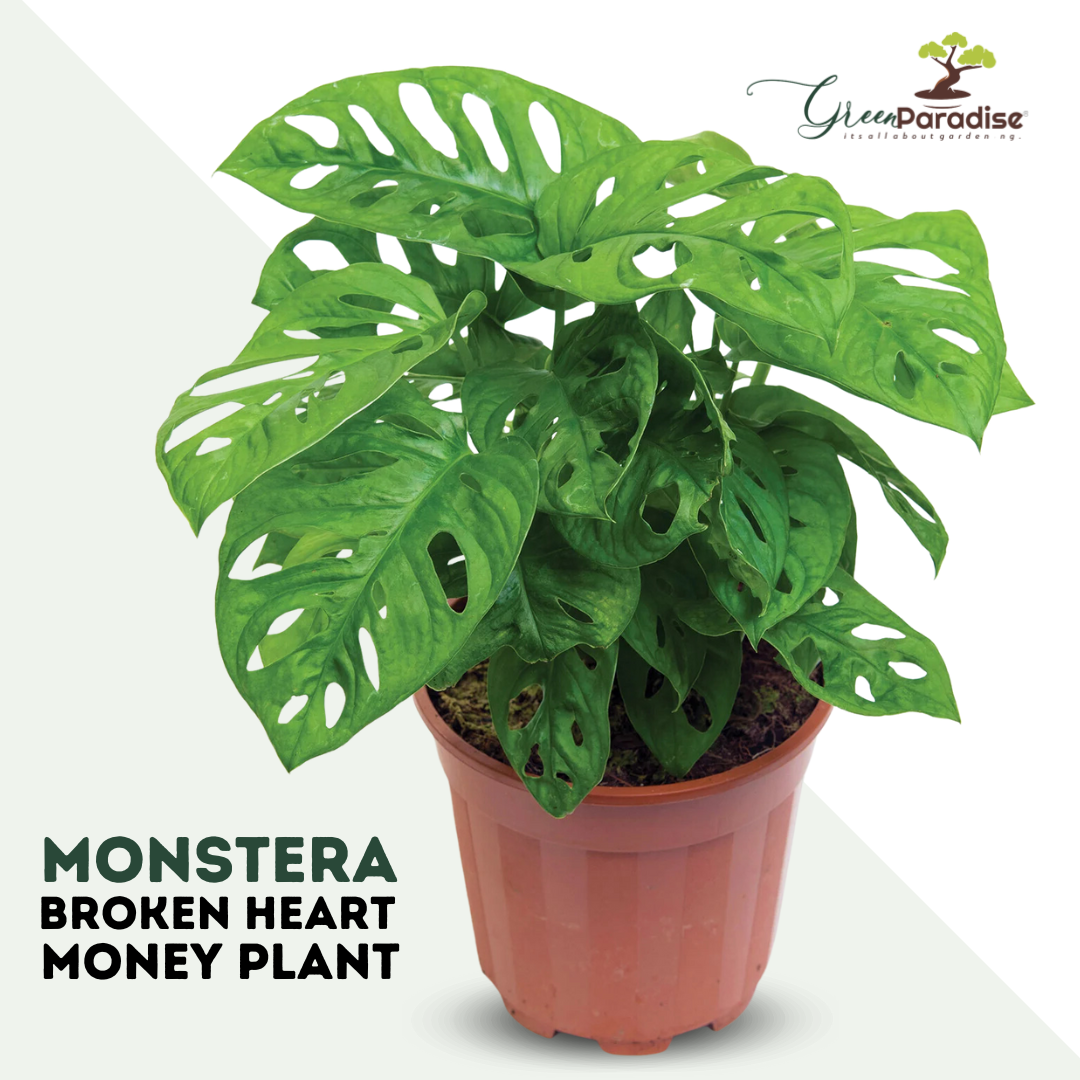
SKU: 45050605914
heart shaped money plant

heart shaped money plant Green Paradise® Monstera Broken Heart Money Plant – GreenParadiseLive

Sale price$26.60 Regular price$29.55
Save 10%

Pay in installments of $7.39 with ShopPay, AfterPay and Klarna

Shipping Estimate
USA
  • USA
  • CAN

Ships within 48 hours · Estimated delivery Aug 6 - Aug 11

Promo Codes Available:

For Your Every Summer RSVP, with Code: SUMMER15

Description

heart shaped money plant Green Paradise® Monstera Broken Heart Money Plant – GreenParadiseLiveIntroducing the Monstera Broken Heart Money Plant An Exquisite Fusion of Nature's Beauty and Prosperity! Unlock the extraordinary with our Monstera Broken Heart Money Plant, a botanical masterpiece that transcends the boundaries of conventional greenery. This captivating plant, also known as the Philodendron Monstera 'Obliqua,' is more than just a charming addition to your space; it's a symbol of resilience, elegance, and financial fortune. Key

Introducing the Monstera Broken Heart

Money Plant - An Exquisite Fusion of

Nature's Beauty and Prosperity!


Unlock the extraordinary with our Monstera Broken Heart Money Plant, a botanical masterpiece that transcends the boundaries of conventional greenery. This captivating plant, also known as the Philodendron Monstera 'Obliqua,' is more than just a charming addition to your space; it's a symbol of resilience, elegance, and financial fortune.


Key Features:


Unique Heart-Shaped Foliage:


  • Witness nature's artistry with the Monstera Broken Heart Money Plant.
  • Its leaves, intricately shaped like a broken heart, add a touch of poetic beauty to any environment.
  • Each leaf tells a story, making this plant a conversation starter and a visual delight.


Prosperity and Abundance:


  • Elevate your living space with a plant that not only breathes life into your home but also attracts positive energy.
  • The Monstera Broken Heart Money Plant is believed to bring prosperity and good luck, making it a cherished gift for housewarmings, weddings, and new beginnings.


Low Maintenance Elegance:


  • Embrace the joy of hassle-free gardening! This resilient plant thrives in various conditions and adapts effortlessly to your lifestyle.
  • With minimal care requirements, it's perfect for both seasoned plant enthusiasts and beginners looking to enhance their indoor oasis.


Air Purification:


  • Beyond its aesthetic appeal, the Monstera Broken Heart Money Plant contributes to a healthier living space.
  • Known for its air-purifying qualities, this plant helps remove common indoor pollutants, promoting cleaner, fresher air for you and your loved ones.


Versatile Placement:


  • Whether adorning your living room, bedroom, office, or any other space, the Monstera Broken Heart Money Plant effortlessly blends with different decor styles.
  • Its versatile nature allows you to experiment with placement, creating a personalized and stylish sanctuary.


Benefits:


Aesthetic Sophistication:


  • Elevate your interior aesthetics with the Monstera Broken Heart Money Plant.
  • Its striking appearance and unique foliage make it a focal point, transforming any space into a sanctuary of elegance.


Positive Vibes:


  • Embrace the positive energy radiated by this remarkable plant.
  • Its presence is believed to invite good fortune, creating an environment conducive to joy, prosperity, and abundance.


Therapeutic Gardening:


  • Immerse yourself in the therapeutic benefits of nurturing a living being.
  • The act of caring for the Monstera Broken Heart Money Plant can be a calming and rewarding experience, promoting mindfulness and well-being.


Gifting Elegance:


  • Surprise your loved ones with an out-of-the-ordinary present.
  • The Monstera Broken Heart Money Plant is a thoughtful and meaningful gesture, symbolizing enduring love, growth, and financial well-being.


Exclusive and Rare:


  • The Monstera Broken Heart Money Plant is a rare gem in the world of indoor plants.
  • Its scarcity adds an element of exclusivity to your collection, making it a valuable and cherished possession.


Symbolic Significance:


  • More than just a plant, this Monstera variety carries symbolic meaning.
  • The broken heart-shaped leaves evoke emotions and create a narrative, making it a poignant addition to your space.


Distinctive Growth Pattern:


  • Watch as your Monstera Broken Heart Money Plant matures into a statement piece.
  • Its growth pattern is a spectacle, unfolding with grace and presenting an ever-evolving display of natural artistry.


Joyful Gardening Journey:


  • Join a community of plant enthusiasts who appreciate the beauty and charm of the Monstera Broken Heart Money Plant.
  • Share in the joy of watching your plant flourish, creating a connection that transcends the ordinary.


Nurturing Elegance: A Guide on How to Grow

Monstera Broken Heart Money Plant


In the world of indoor plants, the Monstera genus stands out for its unique and captivating species. Among them, the Monstera Adansonii, affectionately known as the "Broken Heart" or "Swiss Cheese" plant, has gained popularity for its distinctive fenestrated leaves resembling artistic perforations. This guide will walk you through the art of cultivating and caring for the Monstera Adansonii, a green companion that not only graces your space but also brings a touch of nature's charm indoors.


Understanding the Monstera Adansonii


The Monstera Adansonii, often referred to as the "Broken Heart" or "Swiss Cheese" plant, is a tropical vining plant native to Central and South America. Its heart-shaped leaves are characterized by natural holes, making it a sought-after ornamental plant for interior spaces. Growing this captivating species can be a rewarding experience, requiring attention to detail and a nurturing touch.


Planting Essentials


1. Selecting the Right Pot:


  • Choose a pot with good drainage to prevent waterlogging, as excessive moisture can lead to root rot.
  • A climbing support or trellis in the pot will encourage vertical growth, allowing the plant to showcase its charming trailing vines.


2. Soil Composition:


  • Monstera Adansonii thrives in well-draining soil rich in organic matter.
  • A mix of potting soil, perlite, and orchid bark is an excellent choice, providing the necessary aeration for healthy root development.


3. Optimal Light Conditions:


  • Place your Monstera Adansonii in bright, indirect light.
  • While it can tolerate some degree of shade, exposing it to filtered sunlight will promote robust growth and vibrant foliage.


4. Temperature and Humidity:


  • Maintain a warm and humid environment, as these plants prefer temperatures between 65-75°F (18-24°C).
  • Regular misting or placing a tray of water nearby can elevate humidity levels.


Watering Wisdom


1. Moderation is Key:


  • Allow the top inch of soil to dry out before adding water.
  • Overwatering can lead to root rot, while underwatering can cause the leaves to lose their characteristic perforations.


2. Quality Water Matters:


  • Use room-temperature, filtered water to avoid harsh chemicals that may harm the plant.
  • Rainwater or distilled water is an excellent choice.


Pruning for Prosperity


Regular pruning is essential to maintain the health and aesthetics of your Monstera Adansonii.


1. Trimming Dead or Yellow Leaves:


  • To foster new growth, remove any dead or fading leaves.
  • This ensures that the plant directs its energy towards healthy foliage.


2. Encouraging Bushier Growth:


  • Pinch back the growing tips to stimulate bushier growth and a fuller appearance.


Troubleshooting Tips


1. Pest Control:


  • Keep an eye out for pests similar as spider diminutives or aphids.
  • A gentle wipe with a soapy water solution can help control infestations.


2. Yellowing Leaves:


  • Yellowing leaves may indicate overwatering.
  • Acclimate your watering schedule consequently and insure proper drainage.


The Joy of Propagation


The Monstera Adansonii is relatively easy to propagate.


Here's a simple method:


Select a Healthy Stem:


Choose a stem with at least two nodes, the points from which leaves and roots grow.


Cut Below a Node:


Using clean, sharp scissors, make a diagonal cut just below a node.


Rooting Medium:


Place the cutting in water or a mix of perlite and potting soil until roots develop.


Transplanting:


Once roots are a few inches long, transplant the cutting into a new pot.


  • Growing a Monstera Adansonii, or the Broken Heart Money Plant, is a delightful journey that rewards patience and care with lush, trailing foliage.
  • By providing the right environment, balancing light and water, and occasionally indulging in the gentle art of pruning, you'll witness the elegance of this tropical beauty unfolding within your living space.
  • So, embark on this green adventure, and let the Broken Heart plant fill your surroundings with the beauty of nature's craftsmanship.


 the Monstera Broken Heart Money Plant is not just a plant; it's an embodiment of elegance, prosperity, and a harmonious connection with nature. Elevate your surroundings and cultivate positive energy with this exquisite botanical treasure. Welcome the Monstera Broken Heart Money Plant into your home and let it be a source of joy, inspiration, and good fortune for years to come.

Shipping Notes
  • Free Standard Shipping on $100+ Orders to the USA.
  • Except Preorder products are shipped in 48 hours.
  • Delivery to the USA:
  1. Standard Shipping : 3-10 business days
  • If time is of the essence, please consider selecting expedited delivery for faster service.
Exchange/Return Notes
  • We offer a 30-day return/exchange service after receiving.
  • Final sale items are not eligible for returns or exchanges.
  • To process your return/exchange, please contact us at [email protected]
  • Please click here for more details>>> Return & Exchange Policy
SKU: 45050605914

Discover Niche Categories That Outsell heart shaped money plant

Top-Converting Item to Boost Your Average Order

4.7 ★★★★★
Based on 11 reviews
Sort
Highest Rating
Newest First
Oldest First
Product Reviews
K
Verified Purchase
Kindle Customer
Massapequa, US
★★★★★ 3
A Book About Everything and Nothing
This was a great idea for a book and it's too bad that Mr. Schoch decided not to write it. Some of the ideas about solar events, the way the plasma manifested in the sky as it relates to ancient petroglyphs is fascinating. Mr. Schoch spent very little time in this space however (in spite of the book's title). Instead we got a brief, incomplete overview coupled with a survey of every piece of fringe science out there from the memory of water, to quantum entanglement to telepathy. There was the obligatory chapter on his work with the Sphinx of course. It always comes back to the Sphinx with this guy. Not an original thought in the book, but there was plenty of promotion of fringe science, especially the work of Paul LaViolette whose confusing and widely ignored and self-published work got several chapters. I gave the book 3 stars for its entertainment value and docked it two for not staying on point. This is still a great and fascinating subject. I wish Mr. Schoch thought so too.
WAS THIS REVIEW HELPFUL?YesReportShare
Reviewed in the United States on March 30, 2015
C
Verified Purchase
Chongyean Cheang
Phoenix, US
★★★★★ 5
An amazing book
Format: Paperback
Silent Spring by Rachel Carson is one book that has opened our minds to how much has gone wrong in the world. It is an immensely powerful scientific book for general readers packed full of verifiable research and data. Rachel Carson wrote the book about the widespread use of chemical pesticides that have wreaked havoc upon the water, the atmosphere, the soil, and the earth since the experiments conducted during World War II. Carson begins the book with a short chapter containing an imaginary scenario of a quiet American countryside in spring devoid of birds and other wildlife. Carson then asks a question which the book attempts to answer: "What has already silenced the voices of spring in many towns in America?" (Carson 1962) The other sixteen chapters fully detail how the use of chemical pesticides and herbicides impacts the environment and silences living species when people do not pay attention. In chapter two she makes the point that humans can alter nature. "The most alarming of all man's assaults upon the environment is the contamination of air, earth, rivers, and sea" (Carson 1962). The author demonstrates that people try to get a quick fix for their small problems but are often unaware of the consequences of their quick fix solutions. "We use the chemicals to kill weeds, insects, and pests…… They should not call insecticides but biocides" (Carson 1962). In the next chapter, "Elixirs of Death," she introduces chemicals which can harm health such as chlorinated hydrocarbons (e.g., DDT), organic phosphates, and other hydrocarbons that are more toxic than DDT such as dieldrin, Aldrin, and endrin. She tells the story of a child and family dog that was suddenly killed by the use on an endrin cockroach spray. When the chemicals are combined with one another, it leads to an unpredictable and harmful result in the atmosphere and living creatures. Carson continues in chapter 4 and five by describing the effect of pesticides in water and soil. Even though low concentrations of insecticide in the water is not detrimental, a habit of putting poison in water builds up and ends up passing into fishes, animals, and humans. DDD and DDE, the toxaphenes used in clear lakes destroy the human adrenal cortex (Carson 1962). Even though the chemicals had been deposited years ago, it was carried on in living species from generation to generation. Similarly, soil can be destroyed if it contains too many pesticides and these chemicals may remain in the ground for an extended period. The following chapter of the book mentioned that there are ways to avoid using insecticides to kill insects such as introducing different species of plants or by introducing plant-eating insects. Carson continues her analysis of the life-threatening consequences of pesticides on the surroundings in chapters 7, 8 and 9. She mentions that the entire population of living creatures, including birds and fish, was killed in sprayed areas. "Aldrin, one of the deadliest of all chemicals, was chosen to kill the Japanese beetles... After a few reports came in of dead birds everywhere…. Dogs and cats sickened" (Carson 1962). The author also provides excerpts of letters from people who lived in the areas saying that these pesticides changed the landscape of the areas in which they lived. One woman reported that the spraying of these chemicals had wiped out robins, chickadees, and cardinals. Other women from Alabama said the result of fire-ant spraying made the birds disappear overnight. Other people in Mississippi saw no land birds for miles after spraying. The author ends the chapter with the question, "Isn't it possible to help the balance of nature without destroying it? Who has the right to decide about the use of chemicals?" Chapter 10 details the death of wildlife when aerial spraying is conducted. She comments on the lack of precaution and foresight being used by the pesticide industry. "No research was done before the launch of million acres aerial campaign" (Carson 1962). It shows the lack of caution and general unawareness of the consequences of their actions. The following chapter examines the evidence that the widespread use of poisonous substances can cause the slow, prolonged destruction of human health. For example, she mentions, "DDT has been found everywhere in processed food and cooked restaurant meals" (Carson 1962). The cumulative effect of using different chemicals is that it is incorporated into our food. It is unpredictable how much it can cause harm. A huge amount of poison is everywhere; people exist in their day-to-day lives without knowing that it is even there. Carson calls it "the age of poison" (Carson 1962). Chapters 12, 13 and 14, Carson directs examines the chemicals harmful to human tissues and organs. Back in the days, we lived in fear of infectious diseases such as smallpox and cholera. Now, we are living with and facing new diseases that Carson calls "the environmental disease." The author gives many examples of the sources of the chemicals and how it reacts and is incorporated into the body. "Dieldrin can have long-term effects such as loss of memory, insomnia, nightmares, and mania" (Carson 1962). At the end of chapter 14, she mentions the statistic that one in every four Americans is developing cancer. The possible explanation is that the sale of chemicals in the market is an accepted part of our lives. She describes how she was slowly dying of cancer as she finished this book. In the next three chapters, Carson describes how insects have developed the ability to reproduce and resist the effects of the sprays. In other words, like the title of Chapter 15 states, "nature fights back." Finally, the final chapter, "The Other Road" presents alternatives to chemical control of pests. Chemical "solutions" should be stopped. Instead, an alternative way is biological solutions based on knowledge of living organisms. She gives examples such as insect sterilization, insect venom as a poison, insect killing microorganisms, and ultrasonic sound to kill mosquito larvae. "The choice, after all, is ours to make" (Carlson 1962). Overall, Silent Spring is all about how the world has changed because of our misguided actions of using harmful chemical pesticides in nature. The book opens our eyes and minds to the fact that these synthetic pesticides have poisoned all living species, destroyed the environment, and contaminated the world. I would recommend this book to all people that are interested in how much the earth is contaminated by humans and want to find a way to help keep the balance of nature without destroying it.
WAS THIS REVIEW HELPFUL?YesReportShare
Reviewed in the United States on February 12, 2018
L
Verified Purchase
Lisa D.
Phoenix, US
★★★★★ 5
Book
Format: Paperback
Enjoyed the book
WAS THIS REVIEW HELPFUL?YesReportShare
Reviewed in the United States on April 27, 2026
S
Verified Purchase
SEONGJAE KIM
Carnegie, US
★★★★★ 5
[book review] Silent Spring
Format: Paperback
Author of Silent Spring Rachel Carson points out in Chapter 14 that cancer was increasing not only in the general public but also in youth: “The monthly report of the Office of Vital Statistics for July 1959 states that malignant growths, including those of the lymphatic and blood-forming tissues, accounted for 15 percent of the deaths in 1958 compared with only 4 percent in 1900. Judging by the present incidence of the disease, the American Cancer Society estimates that 45,000,000 Americans now living will eventually develop cancer. This means that malignant disease will strike two out of three families (221)”. “Today, more American school children die of cancer than from any other disease. So serious has this situation become that Boston has established the first hospital in the United States devoted exclusively to the treatment of children with cancer. Twelve percent of all deaths in children between the ages of one and fourteen are caused by cancer” (221). Why there were trends of increasing cancer? To answer the question, this paper delves into the 3 causes of cancers mentioned in this chapter - radiation, chemicals, and lack of oxygen for cells. Furthermore, it explores additional important questions it makes us ask. Cancer can be caused by natural sources such as ultraviolet radiation from the sun, radiation from certain rocks, and other similar sources. While Carson admits they are still a factor in producing malignancy, she argues that since these sources have existed for longer than life on Earth and only those who are resistant to them have survived over time, modern-day organisms must have adapted to living with them. In other words, there are likely other reasons for increasing cancer rates besides natural sources. Carson believed that it was especially due to the widespread use of man-made carcinogens in pesticides and insecticides. Compared to natural cancer-causing materials, man-made carcinogens were brand new forms of chemicals that had never existed in the natural environment before, so human beings’ slow biological evolution has not adapted to them yet. Carson not only suggested this logical process but also shared some real-life examples of how humans started to realize that man-made materials can cause cancer. Some of them were due to a lack of knowledge about carcinogens and were somehow inevitable because it was occupational exposure. For instance, in 1775, Sir Percivall Pott declared that scrotal cancer, which was so common among chimney sweeps, must be caused by the soot that accumulated on their bodies. “In the early 1920’s women who painted luminous figures on watch dials swallowed minute amounts of radium by touching the brushes to their lips; in some of these women bone cancers developed after a lapse of 15 or more years. A period of 15 to 30 years or even more has been demonstrated for some cancers caused by occupational exposures to chemical carcinogens” (226). At least these occupational carcinogen exposures were limited to relatively small populations. However, DDT which has produced suspicious liver tumors on animal subjects during laboratory tests and was given the definite rating of a chemical carcinogen by Dr. Huper of the National Cancer Institute, and other insecticides were widely used. Not only the direct exposure to those chemicals are problem but also they don't simply disappear after they're used. They keep following up the food chain, ending up in humans and potentially causing cancer. How do some chemicals cause cancer? German biochemist, Professor Otto Warburg has proposed a persuasive theory. He believes that these chemicals or radiation agents destroy the respiration of normal cells, depriving them of energy. This theory was confirmed in 1953 when other researchers were able to turn normal cells into cancer cells by depriving them of oxygen intermittently over long periods. The impact of these chemicals is not limited to existing organisms; they can also affect unborn babies. This is because babies have rapid cell divisions, making them more vulnerable to the effects of cancer-producing agents that penetrate the placenta and act on the rapidly developing fetal tissues. Dr. W. C. Hueper of the National Cancer Institute has suggested that congenital cancers and cancers in infants may be related to the action of cancer-producing agents to which the mother was exposed during pregnancy. The long latent period of most cancers is the time required for the infinite number of cell divisions during which fermentation gradually increases after the initial damage to respiration. However, since babies are in the process of rapid cell division, they may develop cancer faster when exposed to carcinogens compared to adults. How do we end up surrounded by chemicals that potentially cause cancers to not only living humans but even further unborn babies? Carson wrote - “The chemical agents of cancer have become entrenched in our world in two ways: first, and ironically, through man’s search for a better and easier way of life; second, because the manufacture and sale of such chemicals has become an accepted part of our economy and our way of life” (242). But we can’t just stop developing chemicals to pursue better and easier lives or change our lives back to primitive levels because unsatisfactory is human nature. Then what’s the practical solution? I’ll say regulators with expertise. Just like we are not using toxic chemicals that were used in the past thanks to regulations, regulations should keep monitoring such potential dangers. Therefore regulators must be experts. But this approach isn’t perfect. Moving legislation to phase out the use of such carcinogenic chemicals has been slow which makes “what the public is asked to accept as “safe” today may turn out tomorrow to be extremely dangerous” (224). It's hard to believe that toxic chemicals like DDT were widely used just a few generations ago. However, it's important to consider that similar practices may be occurring today in the world we live in right now. In Professor Handwerk’s words “Now You See It… Now You Don’t.” and we must keep asking what are the DDTs - something harmful but shocking widely used - nowadays. It’s the important question that Carson made us think further about the cause of the cancer.
WAS THIS REVIEW HELPFUL?YesReportShare
Reviewed in the United States on March 25, 2024
S
Verified Purchase
Sergio denny
Lexington, US
★★★★★ 4
A powerful and influential
Format: Kindle
This is an important and eye-opening read for anyone interested in nature, public health and environmental protection.
WAS THIS REVIEW HELPFUL?YesReportShare
Reviewed in the United States on January 31, 2026

recommand products